
The quick answer
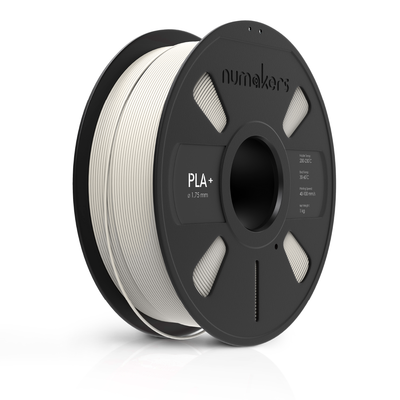
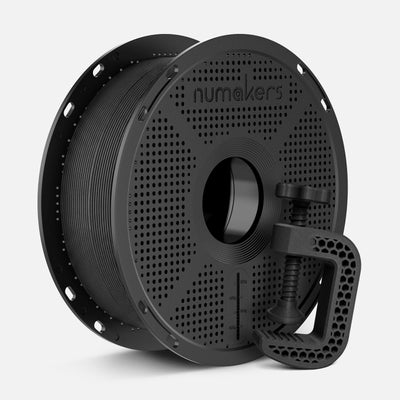
If you are not sure, start with PLA+. It prints as easily as PLA but is tougher, and it covers most models, gifts and everyday parts.
Move to PETG when parts need to bend a little, handle water or sit in a warm room. Choose ASA for anything that lives outdoors in the sun, and ABS for parts near heat, on an enclosed printer.
Interactive
Find your filament
Tell us about the part. The filaments that fit move to the front.

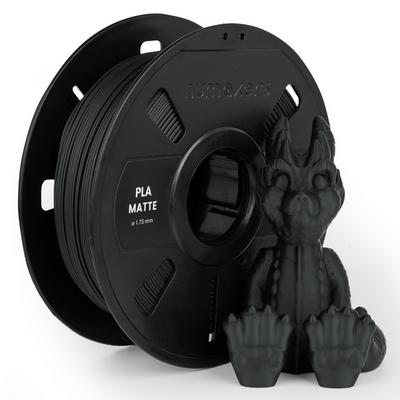
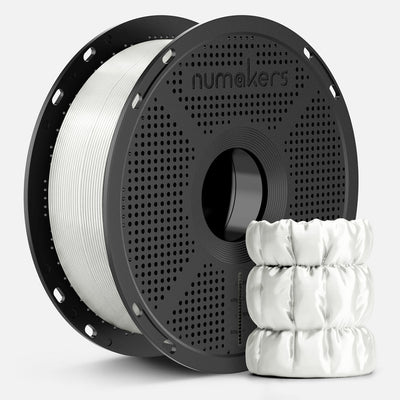
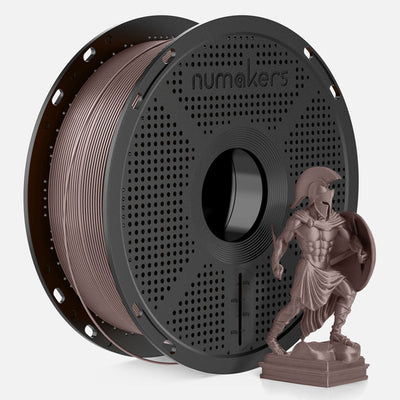
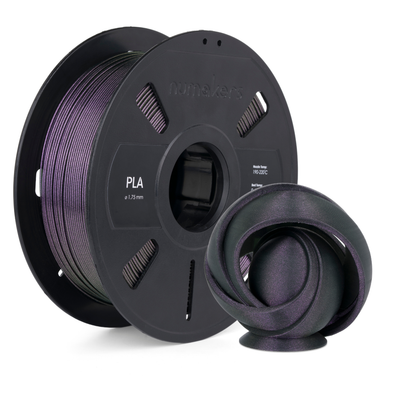
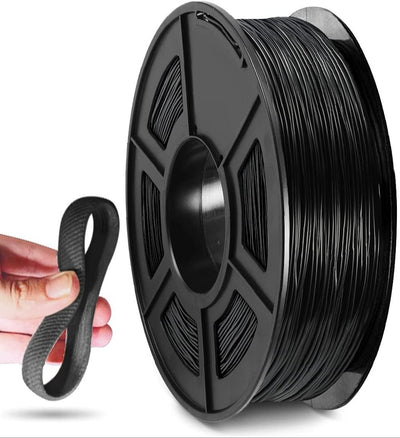
The big four, side by side
Most prints use one of four plastics. Here is how they compare. Ratings are out of 5; temperatures are typical starting points, so always check the label on your spool.
PLA vs PETG vs ABS vs ASA
| Filament | Ease | Strength | Heat | Outdoors | Nozzle | Bed | Printer |
|---|---|---|---|---|---|---|---|
| PLA / PLA+ | 5 | 3 | 1 | 1 | 190 to 230 °C | 45 to 65 °C | Any |
| PETG | 3 | 4 | 3 | 3 | 230 to 260 °C | 70 to 85 °C | Any |
| ABS | 2 | 4 | 4 | 2 | 240 to 260 °C | 90 to 110 °C | Enclosed |
| ASA | 2 | 4 | 4 | 5 | 240 to 260 °C | 90 to 110 °C | Enclosed |
PLA softens at about 55 °C, so a PLA part left in a parked car in summer will droop.
- PLA is the easiest to print and shows the finest detail. Brittle and heat-sensitive, it is ideal for models, prototypes and gifts.
- PLA+ is PLA made tougher. It is our everyday recommendation for parts that get handled.
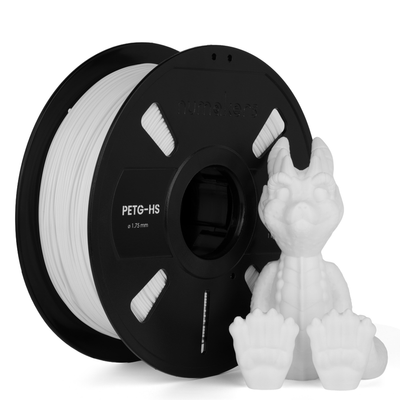
- PETG is tougher, bends before it breaks, handles water and warmer rooms, and prints on any Bambu Lab printer. It can string, so keep it dry.
- ABS is the classic engineering plastic: heat resistant and easy to sand. It needs an enclosed printer and good ventilation.
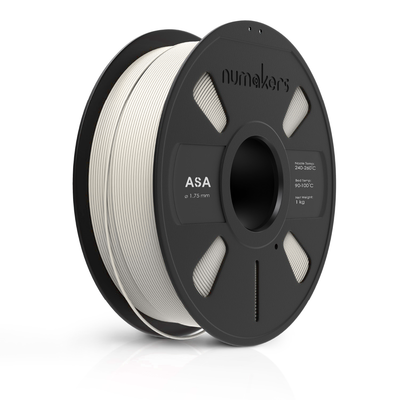
- ASA is like ABS but resists UV, so it keeps strength and colour outdoors. It is the right choice for drone, RC, garden and signage parts.
Special filaments: stiffness, flex and effects
Once you know the basics, special filaments make prints stronger, softer or more beautiful.
Special filaments at a glance
| Filament | What it does | Use it for | Watch out |
|---|---|---|---|
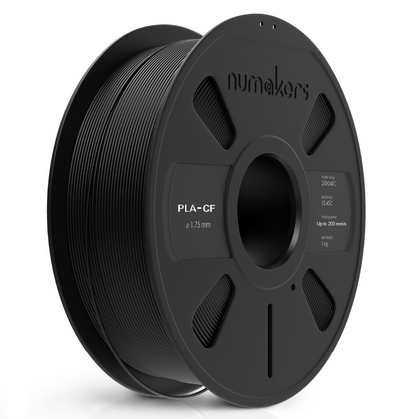
| PLA-CF / PETG-CF | Carbon fibre makes it stiff and light with a matte finish | Drone frames, jigs, brackets | Needs a hardened steel nozzle |
| TPU | Rubbery and flexible | Phone cases, grips, feet, gaskets | Print slowly; usually fed directly, not through an AMS |
| PLA Silk | Shiny metallic sheen | Vases, idols, trophies | Weaker layer bonds |
| PLA Matte | Chalky finish that hides layers | Figures, architecture, prototypes | Scuffs show on dark colours |
| PLA Metallic / Stone / Starlight | Look of metal, stone or glitter | Statues, decor, gifts | Mildly abrasive; hardened nozzle is safest |
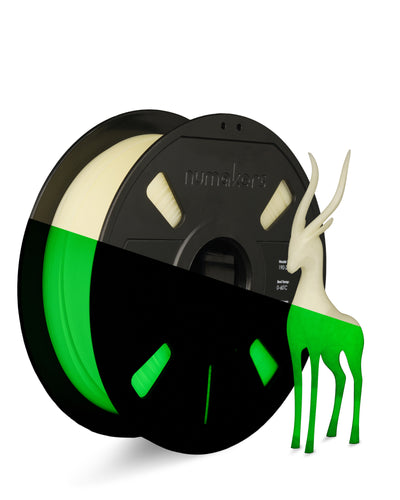
| PLA Glow | Glows in the dark after light | Night lights, markers, kids' rooms | Abrasive: hardened nozzle |
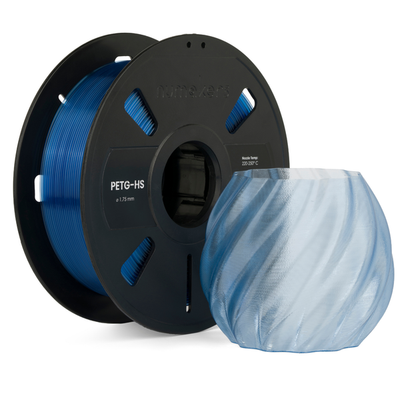
| PETG Translucent | Glassy, lets light through | Lamps, shades, vases | Print hot and slow for clarity |
Bambu Lab lists TPU support by printer and AMS model; check the guidance for your setup.
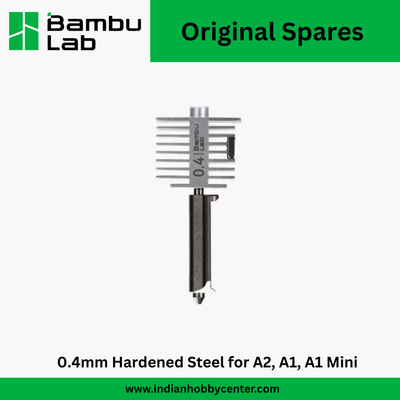
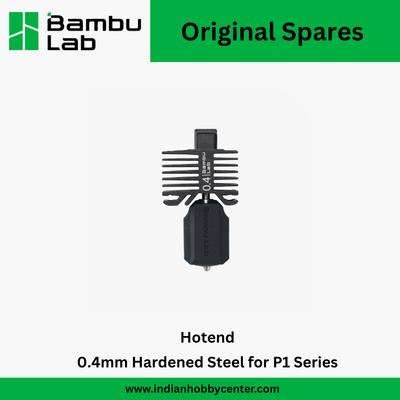
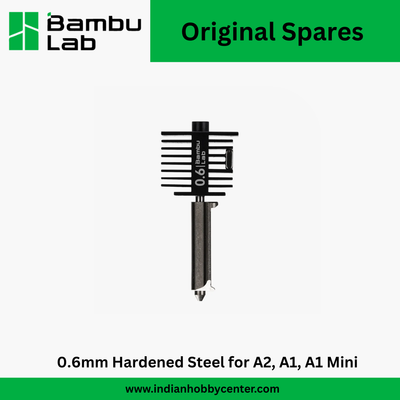
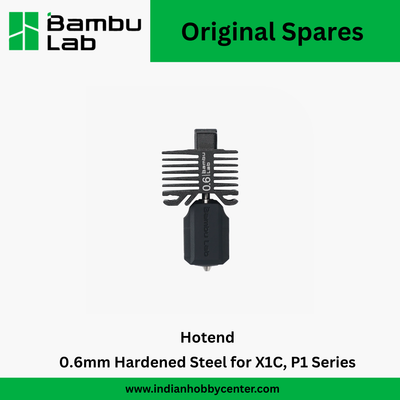
Hardened steel hotends for abrasive filaments
All spares →For A1 and A1 Mini (FAH019, FAH020) and for P1P, P1S and X1C (FAH001, FAH005).
Which printer prints what
Open-frame A series (A1 Mini, A1, A2L): PLA, PLA+, PETG and TPU, plus PLA-CF and PETG-CF with a hardened nozzle. Bambu Lab does not recommend ABS or ASA on these.
Enclosed P1S, P2S and X1-Carbon: everything above plus ABS and ASA. The X1-Carbon ships with a hardened steel nozzle.
X1E, H2S and H2D: heated chambers for engineering plastics such as nylon and PC, as well as everything above.
Not sure about your printer? Read How to choose a 3D printer.
Keep filament dry in Indian weather
Humidity is the hidden enemy of good prints in India, especially from June to September. Moisture makes filament pop, string and print weak.
Keep spools in their sealed bag until you need them. Store opened spools in an airtight box with silica gel, and dry PETG, TPU and nylon before important prints. Our tips and tricks guide has drying temperatures.
Questions
What is the difference between PLA and PLA+?
PLA+ is PLA modified to be less brittle and more impact resistant, with very similar print settings. For parts that get handled, PLA+ is the better choice.
Is PETG stronger than PLA?
PETG is tougher: it bends before it breaks and handles heat and water better. PLA is stiffer and holds detail better, but snaps more easily.
Which filament is best for outdoor use?
ASA. It resists UV and heat, so parts keep their strength and colour in the sun. PETG is a reasonable second choice for shaded outdoor parts.
Can I use any brand of filament in a Bambu Lab printer?
Yes. Bambu Lab printers accept any 1.75 mm filament. Choose a matching generic profile in Bambu Studio and run the flow calibration once for best results.