
Shop by category
Test & Measuring Instruments
Multimeters, oscilloscopes and bench supplies to measure, test and debug with confidence.
Probe a category
- Digital & Analog Multimeters
- Clamp Meters
- LCR Meters & Component Testers
- Oscilloscopes & Signal Gen
- Insulation Testers & Voltage Detectors
- Panel Meters & Power Monitors
- Temperature, Humidity & Environment
- Tachometers
- Calipers, Scales & Measuring Tools
- Test Leads & Probes
- Bench Power Supplies
- Battery Testers
- All Test & Measuring Instruments
-
Pocket Digital Multimeter, Yellow (AC/DC Voltage & Current)
Regular price Rs. 189.00Regular price -
Lithium Battery Level Indicator Module 1S to 8S (MH-DL18S)
Regular price Rs. 75.00Regular price -
Mastech MS-830L Digital Multimeter (Original)
Regular price Rs. 949.00Regular price -
Digital Voltmeter Ammeter Module 0-100V 10A, Dual LED (HW-808)
Regular price Rs. 199.00Regular price -
LiPo Battery tester Voltage Checker 1S-8S with Buzzer
Regular price Rs. 129.00Regular price -
Mastech MS833 Pocket Digital Multimeter – Manual Ranging
Regular price Rs. 349.00Regular price -
INGCO DM6011 Smart Auto-Range Digital Multimeter
Regular price Rs. 649.00Regular price -
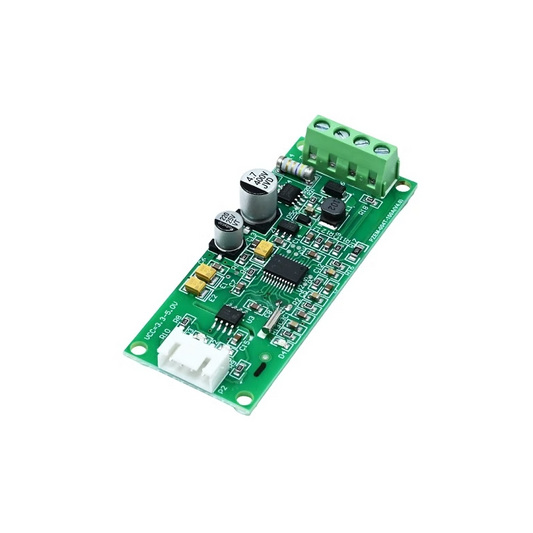
Peacefair PZEM-004T 100A AC Energy Meter Power Monitor with CT Coil
Regular price Rs. 799.00Regular price -
0.28 inch Red DC Voltmeter, 2-Wire, 4.5-30V
Regular price Rs. 89.00Regular price -
3S Lithium Battery Level Indicator Module
Regular price Rs. 65.00Regular price -
MetroQ MTQ-111 Digital Multimeter
Regular price Rs. 599.00Regular price -
Digital Vernier Caliper 150 mm / 6 inch
Regular price Rs. 399.00Regular price -
 Sold out
-
CRO Oscilloscope Test Probe, BNC to Crocodile Clip
Regular price Rs. 199.00Regular price -
Peacefair PZEM-004T 10A AC Energy Meter Power Monitor
Regular price Rs. 699.00Regular price -
OWON SPE3102 30V 10A Programmable DC Power Supply
Regular price Rs. 11,499.00Regular price -
Mastech M266 Digital AC Clamp Meter
Regular price Rs. 1,499.00Regular price -
DSN-VC288 Digital Voltmeter Ammeter Module 0-100V 10A (XK-001)
Regular price Rs. 199.00Regular price -
USB Logic Analyzer 24MHz 8-Channel for MCU, ARM, FPGA Debugging
Regular price Rs. 599.00Regular price -
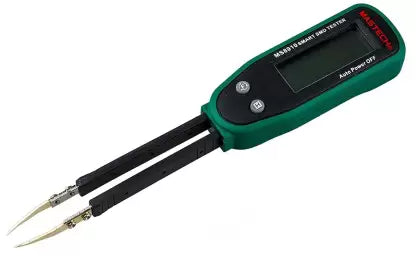
Mastech MS8910 Smart SMD Tester (ORIGINAL)
Regular price Rs. 2,349.00Regular price -
Digital Thermometer Hygrometer Mini LCD
Regular price Rs. 199.00Regular price -
0.56 inch Digital DC Voltmeter, 2-Wire LED (4.5-30V)
Regular price Rs. 85.00Regular price -
INGCO HSDT30021 Test Pencil Digital Voltage Tester AC 12-300V
Regular price Rs. 499.00Regular price -
MetroQ MTQ-109+ Auto-Range Digital Multimeter (True RMS, 6000 Counts)
Regular price Rs. 1,399.00Regular price






Buying guide
Pick the right meter for the job, first time.
From a first multimeter for a school project to an insulation tester for site work: what each instrument measures, which specs matter, and how to test safely.
What do you want to measure?
Start here. Each card opens the matching range in our store.
Voltage, current, resistance
The first tool every maker needs. Digital for accuracy, analog for watching a value swing.
Multimeters →Current without cutting wires
Close the jaws around one wire to read its current. Ideal for house wiring, motors and AC loads.
Clamp meters →Components: L, C, R, transistors
Identify and check capacitors, inductors, diodes and transistors in seconds.
LCR & testers →Signals over time
See PWM, serial data, noise and ripple as a wave. Signal generators make test signals.
Oscilloscopes →Is it live? Is it safe?
Voltage detector pens warn of live wires. Insulation testers check cables and motors before power-up.
Insulation & voltage →Watch power all the time
Fit into a project box or board and show volts, amps, watts and energy live.
Panel meters →Heat, humidity, light, sound
Thermometers, IR guns, hygrometers, lux and sound meters for labs, workshops and 3D printing.
Environment meters →Motor speed (RPM)
Measure how fast a shaft, fan or propeller spins. Laser models need no contact.
Tachometers →Size, weight, level
Vernier and digital calipers, measuring tapes, pocket scales and spirit levels.
Calipers & tools →Leads and probes
Replacement test leads, crocodile clips and scope probes. Match your meter's CAT rating.
Leads & probes →Clean power for testing
Set an exact voltage and a current limit, so a wiring mistake does not burn your board.
Bench power supplies →Battery health
Check cells, LiPo packs and lead-acid batteries before a flight or a ride.
Battery testers →The specs that matter
Product pages are full of numbers. These are the ones that change what you can do.
Multimeters
- Counts (2000, 6000, 20000)
- How fine the display is. A 6000-count meter shows 5.999 V where a 2000-count one shows 5.99 V.
- Auto-range
- The meter picks the range for you. Easier for beginners; manual range is cheaper and fine once you know your values.
- True RMS
- Reads AC correctly even when the waveform is not a clean sine, such as from inverters, dimmers and motor drives.
- Extras
- Capacitance, frequency, temperature, continuity buzzer and non-contact voltage (NCV) save buying a second tool.
Clamp meters
- AC only or AC/DC
- Basic clamps read AC current only. For DC (solar, batteries, EV and drone packs) choose an AC/DC model.
- Jaw opening
- Must be wider than the cable you will clamp. Check the mm figure against your thickest wire.
- Current range
- 400 A suits homes and shops; 1000 A suits industrial panels. Small-current work wants a fine low range.
- One wire only
- Clamp a single conductor. Around a whole cable the currents cancel and you read zero.
Oscilloscopes
- Bandwidth (MHz)
- Choose about five times the fastest signal you will look at. Arduino PWM and audio are fine on a small scope.
- Sample rate (MSa/s)
- Points captured per second. Higher sample rates draw fast edges more accurately.
- Channels
- One shows a signal; two let you compare input with output, or clock with data.
- Handheld or bench
- Handheld and pocket scopes go to the field. Bench scopes give a bigger screen and more channels.
Who needs what
A starting point for common buyers. Every kit grows over time.
| You are | Start with | Add later |
|---|---|---|
| Student or school lab | Digital multimeter with continuity buzzer | Component tester, bench power supply |
| Arduino / ESP32 maker | Auto-range multimeter, panel meter for projects | Pocket oscilloscope, LCR meter |
| Drone and RC hobbyist | Multimeter, battery tester | AC/DC clamp meter, laser tachometer |
| Electrician | CAT III clamp meter, voltage detector pen | Insulation tester, True RMS multimeter |
| Repair technician | True RMS multimeter, LCR meter | Two-channel oscilloscope, bench power supply |
| Workshop and 3D printing | Digital caliper, IR thermometer | Pocket scale, hygrometer for filament storage |
Stay safe: read the CAT rating
The CAT rating printed near the sockets says where a meter is safe to use. A higher category handles bigger voltage spikes.
Low-voltage electronics, battery projects, circuits not connected to the mains.
Plug-in appliances and sockets inside the home.
Distribution boards, fixed wiring, motors and industrial machines.
The supply side: energy meters, outdoor lines and the incoming service.
- Leads: test leads must carry the same or a higher CAT rating than the meter.
- Sockets: never measure voltage with a lead in the current (A) socket. Move the dial before you move the probes.
- Prove it: check the meter on a known live source before and after testing a circuit you believe is dead.
- Fuses: replace a blown fuse only with the exact type the manual names.
Questions buyers ask
Digital or analog multimeter: which should I buy?
Buy digital for your first meter. It is more accurate, easier to read and usually adds auto-range and a continuity buzzer. An analog meter is handy as a second tool to watch values that move, such as a charging capacitor.
What does True RMS mean, and do I need it?
A True RMS meter reads AC voltage and current correctly even when the waveform is distorted. You need it for inverters, UPS output, LED drivers, speed controllers and solar systems. For simple mains checks a standard meter is enough.
Can a multimeter test capacitors and transistors?
Many multimeters measure capacitance, and most test diodes. For inductors, ESR or identifying transistor pins, an LCR meter or component tester is faster and more accurate.
Contact or non-contact (laser) tachometer?
A laser tachometer reads RPM from a reflective strip without touching the part, which is safest for propellers and fans. A contact tachometer touches the shaft end and can also measure surface speed with its wheel.
Vernier caliper or digital caliper?
A digital caliper is quicker to read and switches between mm and inches. A vernier caliper needs no battery and lasts for decades. Both measure outside, inside and depth.
How much oscilloscope bandwidth do I need?
About five times the frequency of the signal you want to see clearly. For Arduino PWM, audio and most hobby work a 10 to 50 MHz scope is enough; faster digital buses need more.
Learn. Shop. Share.
Not sure which meter fits your project? Message us on WhatsApp with what you want to measure and we will help you choose.
About Test & Measuring Instruments
Test and measuring instruments for electronics labs, electricians, students and makers: digital multimeters, clamp and LCR meters, oscilloscopes, bench power supplies, insulation testers, panel meters, tachometers, thermometers and calipers from Mastech, MetroQ, OWON, INGCO, Metravi and more.
Shop by brand


