



IC sockets (integrated circuit socket) act as static connectors between integrated circuits (ICs) and printed circuit boards (PCBs). IC Sockets are used for two primary reasons:
- IC sockets prevent damage to ICs caused by soldering IC chips directly to the circuit board. Instead, the more durable IC sockets are soldered to the board and the chip is simply inserted into the socket.
- IC sockets allow ICs to be inserted and removed easily. This means damaged IC chips can be replaced with relative ease without damaging the PCB.
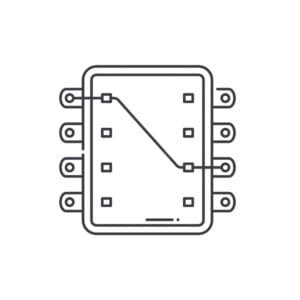
IC Socket Symbol:
IC Socket Structure Map:
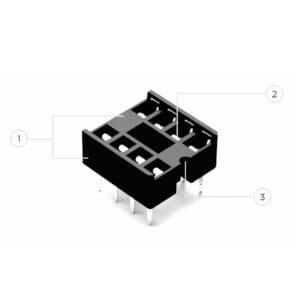
- Designed for automatic machine insertion — IC-to-socket or socket-to-board
- Large target area with tapered lead-in ramps for easy DIP insertion
- Polarization notch
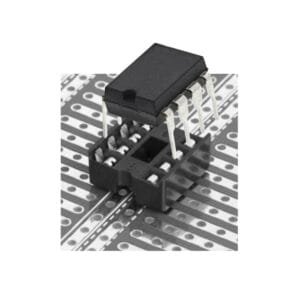
IC Insertion:
Features:
- Holds the IC firmly in place and aligns its leads to make contact with the PCB
- Provides electrical connectivity between the IC leads and PCB traces
- Allows easy insertion and removal of the IC from the PCB without soldering
- Facilitates replacement and swapping of ICs for testing or servicing purposes
- Offers mechanical protection and support for the inserted IC
- Comes in standardized sizes and styles to match common IC packaging
Applications:
- Prototyping & Development - Enables easy IC swapping during testing
- Repair & Maintenance - Allows IC replacement without desoldering
- Microcontroller Programming - Used in programmers for firmware updates
- Testing & Burn-in - Helps test ICs under real-world conditions
- High-Pin-Count ICs - Protects expensive or delicate chips
- Military & Aerospace - Ensures easy IC replacement in critical systems
- Educational & DIY - Ideal for experiments and modifications
- Vintage & Legacy Systems - Supports upgrades and repairs in old electronics